
News
Latest News & Upcoming Events
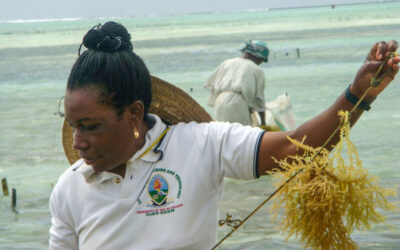
In Memoriam: Dr. Flower Msuya
It is with heavy hearts that we announce the passing of Dr. Flower Msuya, a founding and pivotal member of the Global Seaweed Coalition since its inception. Dr. Msuya’s work has inspired and shaped a whole generation, including the young generation of Tanzanian...
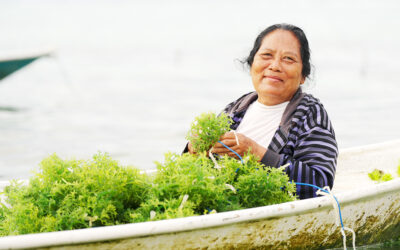
Supporting seaweeds and their myriad contributions to advancing sustainable, inclusive, science- and evidence-based solutions for the 2030 Agenda and beyond
Madagascar, Indonesia, France, UN entities & Global Seaweed Coalition announce support for the creation of a UN Global Seaweed Initiative at the 3rd United Nations Ocean Conference, Nice, France
A coalition of governments, UN entities, and partners has announced the development of a United Nations Global Seaweed Initiative (UNGSI) — a collaborative platform to promote global efforts for safe and sustainable development of the seaweed sector supported by...
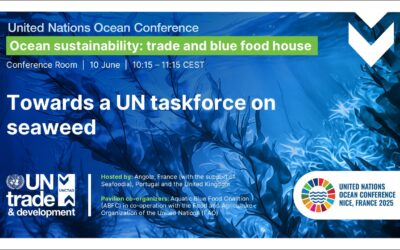
La Baleine event at UNOC3: Towards a UN taskforce on seaweed
10 June 2025, 10:15 - 11:15 hrs. Palais des Expositions, Green zone, Nice, France This session details the UN Taskforce on Seaweed - an initiative bringing together partners to unlock the potential of seaweed for sustainable food systems, climate resilience, and...
Shaping a Sustainable Future for Seaweed in a Regenerative Blue Economy
June 7, 11:30am – 1:00pm, Grimaldi Forum, Monaco Seaweed holds immense potential for regenerating the blue economy, contributing to climate resilience, food security and sustainable livelihoods. This event offers a unique opportunity to highlight the untapped...
Toward the creation of a UN task force on seaweed – Raising the level of ambition for a sustainable blue economy
The Global Seaweed Coalition will host an official in person side-event in the Blue Zone during the 2025 UN Ocean Conference in Nice, France, entitled “Toward the creation of a UN task force on seaweed – Raising the level of ambition for a sustainable blue economy” ...
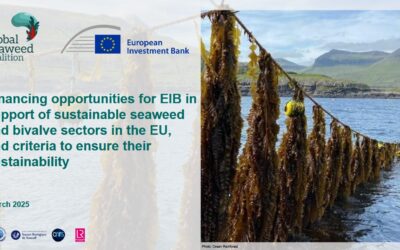
Unlocking the Potential of Europe’s Seaweed and Bivalve Industries
Seaweed and bivalve aquaculture hold immense promise for restoring ocean health, mitigating climate change, and strengthening coastal economies. Market forecasts point to double-digit growth over the next decades. Yet, despite increasing investment and...
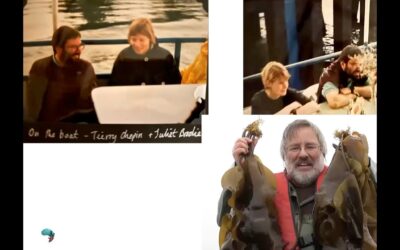
In Memoriam: Professor Thierry Chopin
Tribute to Professor Thierry Chopin, by Dr. Philippe Potin, scientific director of the Global Seaweed Coalition. Throughout his career, Thierry was known for his enthusiasm, charisma, and sense of humor, leaving a lasting impact on the scientific community and...
Congratulations to our 2024 Grantees!
After a highly competitive evaluation process undertaken by the GSC Scientific and Strategic Advisory Councils, the Global Seaweed Coalition Leadership Committee gathering our founding partners from UN Global Compact, CNRS and Lloyds Register Foundation made the final...

The Global Seaweed Coalition will be visiting Japan in April
The Global Seaweed Coalition will be visiting Japan in April! Our local partners from UN Global Compact Japan are working on organizing a great seaweed conference at the Sasakawa Peace Foundation in Tokyo (April 26th, 2pm) in partnership with the French Embassy &...
On Ubuntoo

Why Irish Seaweed Bathing is the Newest Wellness Trend to Try
If any nation has unlocked the full potential of seaweed, it’s Ireland. The earliest records show the sixth-century monks living on Skellig Michael off the southwest coast already made use of it, collecting wild dulse to eat and fertilise their rocky terrace gardens.
Source : National Geographic
.jpg )
ICAR-CMFRI Helps SC Families in Tamil Nadu Village Earn Additional Income Through Seaweed and Ornamental Fish Farming
The ICAR-Central Marine Fisheries Research Institute, Kochi has successfully implemented the Government of India's Scheduled Caste Sub Plan Project for helping the Scheduled Caste families in Puthukudi Village, Thondi, Thiruvadanai Taluk in Ramanathapuram District of Tamil Nadu to empower them through the seaweed and marine ornamental fish farming.
Source : ICAR

Seaweed Eating This Way Helps Support Collagen Production
According to experts, seaweed contains a lot of vitamin C, zinc and amino acids, nutrients necessary for collagen formation. Collagen is a protein that helps maintain skin elasticity, supports bones and joints and slows down the aging process.
Source : Laodong

Growing Benefits: Developing a Sustainable Seaweed Industry
The expanding seaweed industry is an asset for coastal communities, however the challenge will be to develop it further in a sustainable manner.
Source : Irish Examiner

Seaweed May Be ‘the World’s Greatest Untapped Resource’
Vincent Doumeizel, the founder of the Global Seaweed Coalition, a senior adviser on oceans for the United Nations Global Compact and author of The Seaweed Revolution, works to responsibly grow the global seaweed farming sector.
Source : The Pew Charitable Trusts
.jpg )
Adding Seaweed to Cement Could Forever Change the Most Widely Used Material on the Planet
Researchers report that seaweed can be turned into a concrete ingredient that replaces some cement while storing extra carbon as the material hardens.
Source : Earth.com

FAO GLOBEFISH Launches New Quarterly Species Analysis on Seaweed
FAO GLOBEFISH now features specialized reporting on seaweed in its Quarterly Species Analysis expanding its market intelligence coverage under the flagship GLOBEFISH Highlights publication. It brings focused reporting on a product group that is becoming increasingly important in global aquatic food systems, both for direct food use and for further processing into food ingredients.
Source : FAO

Maine Researchers Break Down the Hidden Cost Drivers of Seaweed Farming to Improve Profitability
Seaweed farming for food, beauty products, fertilizers and other uses has rapidly gained momentum in the western hemisphere. However, as the industry has matured and realistic market values have emerged, economic challenges have slowed growth. Increasingly, new growers have been struggling to build stable, long-term business plans.
Source : Global Seafood Alliance

Study: Finds Direct Nutrient Transfer from Salmon to Kelp in Bantry Bay Trial
Atlantic salmon farmed alongside sugar kelp in Bantry Bay transferred measurable nutrients to the seaweed crop in a commercial-scale integrated multi-trophic aquaculture (IMTA) system, according to a new peer-reviewed study published in Scientific Reports.
Source : Salmon Business

Green Light for Regenerative Sea Farm Expansion Follows Biostimulant Breakthrough
Welsh seaweed and shellfish farmers have been given the go-ahead to expand two sea farms, a decision which will create jobs and increase production of a regeneratively-grown, trial-proven seaweed alternative to chemical fertiliser.
Source : Business News Wales